From Segments to Scores: Turning Signals Into Smart GTM Priorities
In our last post we dove into the reasons why segmenting by behavior, not just demographics, is a key component for teams to drive faster growth. Going beyond age, location, title and company, and into the behaviors that will help you prioritize the prospects who have a problem that needs to be solved now.
Now that you understand and track the behaviors that are fueling your pipeline, we can move on to the next step in the journey, which will help everyone across the organization understand that ambiguous term "prioritize." Lead scoring.
What Is Lead Scoring?
Lead scoring is a system for ranking leads based on specific characteristics that let you prioritize those who fit your ICP and are signaling that they may want to buy. It helps sales and marketing teams:
- Prioritize outreach
- Automate workflows
- Personalize follow-up
- And, most importantly, stop wasting time on people who aren’t ready
Think of it as turning your segmentation strategy into an action plan. By providing each segment a score based on how valuable that characteristic is to your funnel, you can quickly jump those with the greatest urgency to the top of the list.
Demographic Scores (Fit)
The demographic score helps you assess how well someone matches your ICP (ideal customer profile). It helps you answer the question: Should we sell to them at all? Buyer characteristics can shift over time, but for the majority of organizations, once you set this criteria it won't change much. You may add or remove a title from the list here or there, but most other things will stay the same.
Behavioral Scores (Intent)
These scores help you assess how engaged someone is with your offering. It helps you answer the questions: Should we sell to them now? These scores can come from a variety of different resources and will change over time. Especially as you launch new content and campaigns.
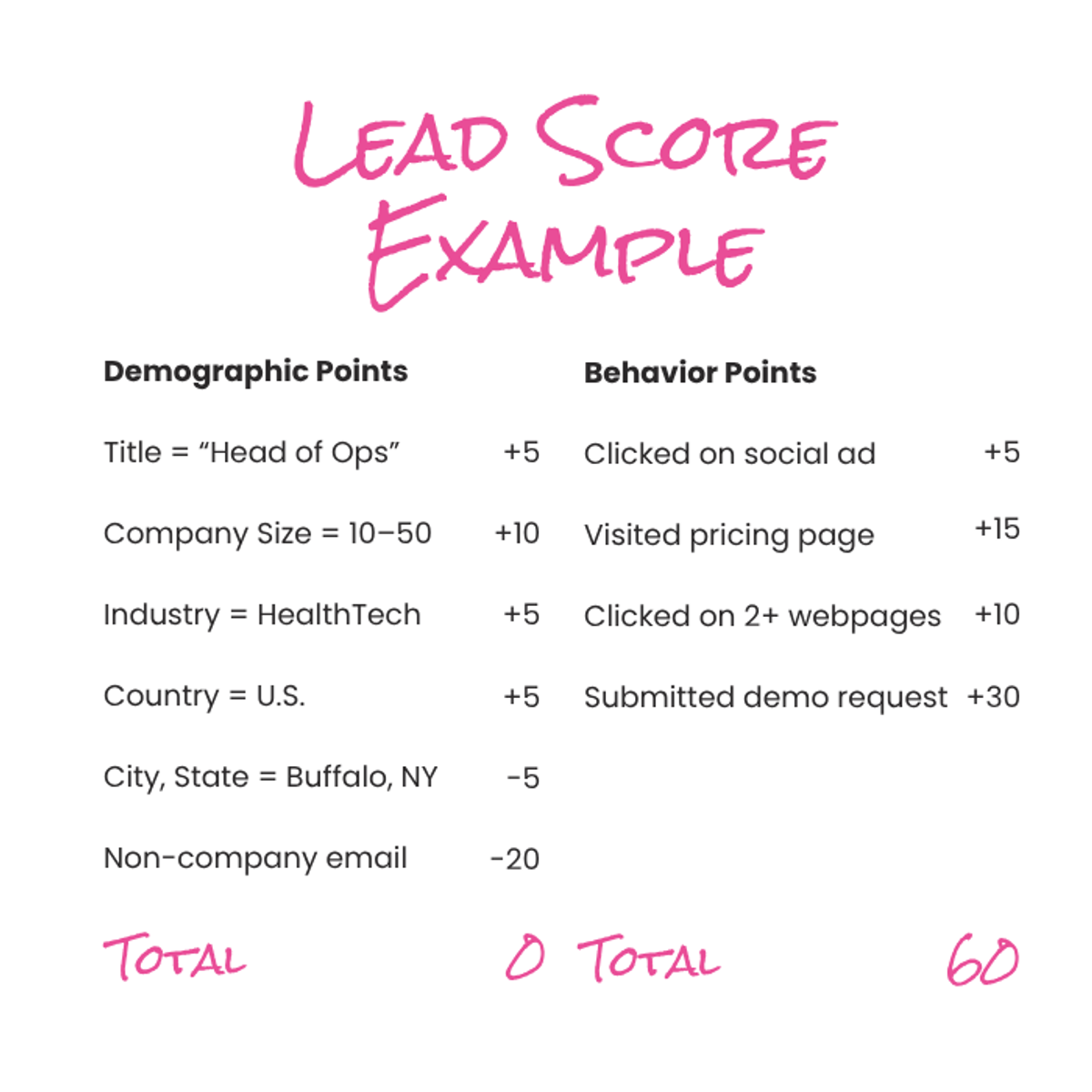
In the example above, we have a situation where the potential lead is off the charts as far as behavior / intent goes, but they're not quite hitting the mark as far as demographic / ICP criteria. Specifically, they're from a city where your company has no sales presence and hasn't done well in the past, and they haven't provided a company email address, just a private Google email.
In the past, your SDRs may have skipped over this lead because the lack of a company email would disqualify them. Now, your SDRs can make an informed, data-based decision about what to do next. The behavioral score shows that this person has interest, personal emails aside.
This happened to be a real-life scenario for a client we were working with. Their SDR team reached out to the contact's Google email to just check in and found out the demo request form was auto-populated with the contact's personal email and they hadn't noticed the mistake until they submitted the form. In the end, the contact ended up working for a major multinational company, leading to a huge opportunity. Without the demographic and the behavioral data, this lead may have ended up in the DQ pile in the CRM!
Actions Based on Score
Once your scoring model is in place and goes live, you can begin to experiment with different actions based on score. In most situations, teams will set a threshold that a contact has to hit before it can be considered marketing qualified. Once that MQL threshold is hit, the lead is assigned to someone in sales to vet and convert to an SQL. The idea being that sales is (mostly) getting the leads with the highest intent to buy right now.
For leads that start under but close to the threshold, nurture campaigns can act as a catalyst to get their scores up. You can invite them to a webinar, share an interesting piece of collateral, or provide social proof that will get them to the buying stage faster.
For those leads that are well under the threshold, a holding pattern would work well. For example, add them to longer drip campaigns that keep them interested in what's happening at your company until a point in time that they're ready to buy.
With this approach, you're now moving for a more personalized go to market strategy that is targeting the right people, with the right message, at the right time.
Start Simple, Improve As You Go, We Can Help!
Your first lead scoring model doesn’t need to be perfect. It needs to be useful. Start with defining your ICP characteristics. Check out free resources like Warmly, Google Analytics and HotJar for tracking potential leads on websites. Use your CRM to understand who is downloading or viewing your content.
If you're looking for help strategizing or building your scoring model reach out to our team today. We've helped companies in the education, legal and health technology spaces create models that have helped them grow their pipelines by 2-3x. Schedule your consultation.